
ST.She Thought the Battle Was Behind Her, Until Eight Years Later Neuroblastoma Returned, and Niamh’s Fight as a Teen and Young Adult Became Living Proof That Research, Trials, and Relentless Strength Can Save Lives Twice

Niamh was no stranger to cancer by the time she reached her teenage years, but she believed the hardest part of her journey was already behind her. As a child, she had faced neuroblastoma and come through it, carrying the quiet confidence that survival gives you when life finally feels normal again.
Years passed, and she grew stronger, healthier, and more certain that cancer was part of her past, not her future. She built a life around fitness, strength, and movement, becoming a personal trainer and feeling, by her own words, the strongest she had ever been. Nothing suggested that cancer was waiting silently in the background.
Eight years after being declared clear, small changes began to appear that felt almost impossible to connect to her past. Niamh noticed her lymph nodes were swollen and decided to visit the doctor, expecting reassurance rather than alarm.
Tests followed, and then words she never expected to hear again arrived with brutal clarity. Her neuroblastoma had returned. The shock was overwhelming, not just because of the diagnosis, but because relapse felt illogical after so much time had passed. She felt fit, well, and symptom-free, and yet her life was suddenly turned upside down again.

At fifteen, during her first experience with cancer, Niamh had felt like a trooper, strong and capable of pushing through whatever was asked of her. This time was different. Facing treatment as a teenager and young adult brought a deeper emotional weight, a sharper awareness of what was being taken from her life.
The physical toll was heavier, and the mental struggle harder to process. Knowing what treatment involved did not make it easier, it made it more daunting. Cancer the second time around carried a different kind of fear.
Despite being in her twenties, Niamh found herself treated on a paediatric ward, a reminder of how neuroblastoma continues to blur the lines between childhood and adulthood. Because the disease is typically seen in children, her care remained under paediatric oncology specialists.
That decision became a source of comfort rather than discomfort. The medical team moved quickly, scans and treatment were not delayed, and care was delivered with expertise and compassion. Even small gestures, like helping her partner receive a COVID vaccination, made an enormous difference in an already isolating experience.

Treatment was long, intense, and unrelenting. Over an eighteen-month period, Niamh underwent around sixteen cycles of chemotherapy while simultaneously taking part in a new clinical drug trial designed specifically for relapsed neuroblastoma.
Chemotherapy was physically punishing, pushing her body to its limits and demanding constant resilience. Yet the response to treatment was remarkable. After only a few months, doctors told her there were no active cancer cells detected in her body. It was a moment that felt almost unreal, a fragile but powerful reminder that progress was possible.
Eventually, Niamh had to stop chemotherapy when her body could no longer tolerate it. That decision did not mean the fight was over, but that it was changing shape. She continued with the clinical trial medication, taking six tablets a day, a routine that would become part of her daily life for the foreseeable future.
Far from resenting it, she viewed it as a lifeline. Thanks to research, new drugs, and access to trials, her life had been saved, not once, but again. The reality of that fact never lost its impact.
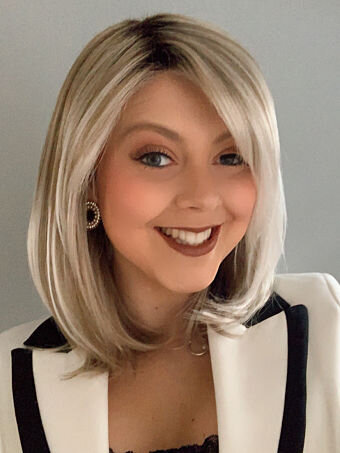
Recovery was not immediate or simple. Months of hospital visits, treatment, and physical exhaustion forced Niamh to step back from the life she had built. She had to put her personal training business on hold and watch her strength fade, knowing she would have to rebuild from the ground up. The mental adjustment was just as challenging as the physical one. Cancer had once again interrupted her sense of momentum, forcing patience where there had once been drive.
Still, Niamh chose to mark the end of chemotherapy with a moment of joy. On her last day of treatment, she picked up a new puppy, a small but meaningful symbol of life moving forward again. Slowly, she returned to training, starting from scratch and relearning how to trust her body. Over time, strength returned, not just physically, but emotionally. She found her rhythm again, step by step, day by day.
Normality crept back into her life in ways that once felt impossible. She resumed work as a personal trainer and discovered that her body, though changed, was still capable of incredible things. In fact, she found herself fitter than ever before.
Last weekend, she completed her first marathon, running the Paris Marathon in four hours and twelve minutes, a milestone that represented far more than athletic achievement. It was proof of survival, endurance, and the extraordinary capacity of the human body to recover.
Today, Niamh continues to undergo scans every four months, each one holding the familiar tension of waiting. So far, they continue to show no evidence of disease. Mentally, she has moved forward with clarity and gratitude, aware of how rare her outcome once seemed. She feels deeply lucky to be part of a clinical trial specifically for relapsed neuroblastoma, knowing that access to research changed everything. Her story is not just personal, but purposeful.
By sharing her journey, Niamh hopes to raise awareness of neuroblastoma, particularly the reality of relapse and the importance of early detection. She understands firsthand how funding research creates options where none once existed. Organizations like Neuroblastoma UK make stories like hers possible by supporting the development of new, less toxic, and more effective treatments. Her life today stands as evidence that research does not just extend life, it restores it.
Niamh’s journey is a reminder that cancer survival is not always a single chapter with a clean ending. Sometimes it returns, demanding courage all over again. And sometimes, thanks to science, determination, and relentless progress, survival becomes possible twice. Her story carries hope for children, teenagers, and young adults still facing neuroblastoma, and for families searching desperately for proof that better outcomes are within reach.
“Don’t Be Scared to Leave Us”: The Night an Eight-Year-Old Warrior Whispered Goodbye and a Mother’s Love Carried Him Home 3502

“Don’t be scared to leave us.” Those were the final words Redd whispered in her son’s ear as he took his last breath. It was a mother’s permission, given with tears and heartbreak, to her son who had been fighting the relentless battle of neuroblastoma for years. Jaxen, a brave 8-year-old boy, passed away quietly, his struggle ending at 8:48 p.m. last night.

For years, Jaxen had fought this terrible disease with the courage of a warrior, surrounded by the love of his family and the prayers of a community who had never met him but felt deeply connected to his story. His mother, Redd, stayed by his side throughout this fight, never leaving him alone in the hospital, enduring sleepless nights and excruciating days. She rubbed his head, whispered words of love, and fought right alongside him. The fight had been long and painful, but despite everything, Redd never gave up. She never stopped hoping. She never stopped praying.
Throughout those difficult days, we all stood with Redd. We prayed for Jaxen. We hoped with her. The fight was exhausting, but her love for her son kept her going. Yet, in the quiet moments when it became clear that the battle had worn both her son and herself down, Redd did the hardest thing a mother could ever do: she gave Jaxen permission to let go.
“Baby, don’t worry about us. Don’t be scared to leave us,” she told him, holding him close as his breaths slowed. “We’ll miss you, but we’ll be OK. My momma and brother are waiting for you.”
Even in his final moments, Jaxen tried to hold on. His mother, with the kind of love only a mother can know, leaned closer to him and whispered again, “It’s OK. Mommy will be alright. You can come visit me. It’s OK, baby.”
And just like that, the struggle ended. The breath that had been so labored for so long finally stopped. In its place, Redd felt a peace wash over her son, a calm that took him to be with the angels.

In that sacred moment, his parents sang “You Are My Sunshine,” the song that had comforted them all through the hardest of times. Redd, through her tears, told him everything she had carried in her heart—how sorry she was, how hard she tried, how much she loved him. The pain of loss was unbearable, but even in the midst of it, she was still his mother, still holding on to the love that would never leave her.
This is what childhood cancer looks like—this is the part no parent is ever prepared for. It’s the part where a child, still so young, is forced to fight a battle no one should ever have to fight. And it’s the part where, despite the best efforts, the fight eventually ends.
Jaxen was just 8 years old. He was a boy with a bright smile, full of energy, and loved by everyone who met him. He became known to so many people through his journey—people who never met him in person but followed his story with hearts full of compassion and admiration. They watched as this tiny warrior fought with everything he had, knowing that, even in his pain, his strength would inspire others.

Now, Jaxen is at peace. He is no longer struggling, no longer in pain. He has joined the angels, free from the body that failed him too soon. And though his family is left behind to grieve, they can take solace in the fact that their little boy, who had shown so much courage, is finally free.
As Jaxen’s family navigates this unimaginable loss, we must surround them with love and support. Redd and her family need our prayers. They need our love. They need to know they are not walking through this grief alone. In the darkest of times, we are called to be the light for those who need it most. Let’s lift them up, send them our condolences, and offer them the strength to face the days ahead.
Jaxen’s story doesn’t end with his passing. His story lives on in the hearts of everyone who followed his journey. His courage, his fight, and the love his family showed him will never be forgotten. And as his family continues to heal, we will continue to honor Jaxen’s memory by carrying his spirit with us, forever.
Please, join me in sending your prayers and condolences to Redd and her family. Let them know that they are not alone in this. Jaxen’s fight may be over, but the love that surrounded him continues to shine brightly, even in the face of this heartbreaking loss. 💔
