
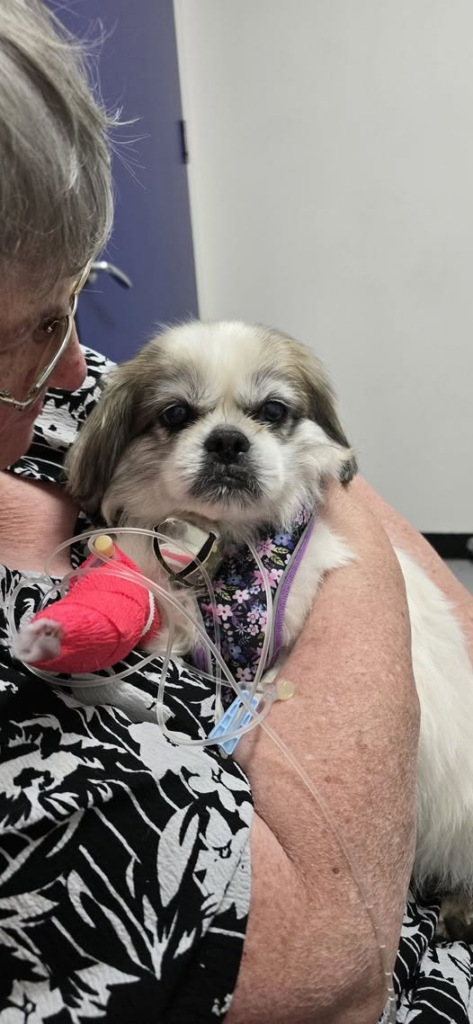
A dog owner is searching for clarity after a series of frightening episodes left even emergency veterinarians unsure whether the cause was neurological, behavioral, or cognitive.
The dog, Daphne, has a complex medical history. Nearly two years ago, she experienced a 24-hour episode of cluster focal seizures following a severe brain injury. Those seizures presented primarily in her face—fly biting, head turning, and excessive salivation. At the time, emergency veterinarians believed scar tissue from the injury was the likely cause, and Daphne was placed on Phenobarbital as a precaution.
She remained seizure-free and was slowly weaned off the medication over six months, completing the process in December 2025.
This week, new and alarming behavior appeared.
Yesterday morning, Daphne woke up normally and began her usual howling protest—but instead of stopping, the howling intensified. She appeared unaware of her owner’s presence. About 30 seconds later, it stopped, and Daphne returned to normal behavior.
Eight hours later, during a routine bath at a local pet store, the episode returned—this time far more intense. After two minutes of drying, Daphne began howling uncontrollably for five to ten minutes, barking, growling, urinating, defecating, and frantically trying to escape to run in circles. Mild salivation was also noted.
“She looked absolutely terrified,” the owner shared. “Completely frantic and not herself.”
Emergency veterinarians do not believe the episode fits a typical seizure pattern and note that it differed significantly from Daphne’s previous focal seizures. There was no loss of consciousness, no tremors, and no collapse, which would be expected in a grand mal seizure.
Now, the owner is left wondering whether the episode was an atypical seizure, a severe panic attack, or possibly related to canine cognitive dysfunction (CCD)—often described as dog dementia—potentially exacerbated by stress.
With no clear answers yet, the owner is turning to other pet parents for insight.
“Has anyone seen something like this in their dog?” she asks. “We’re confused and just trying to understand what’s happening.”
For now, Daphne is being closely monitored as her family weighs next steps, hoping shared experiences might help point them toward answers.

