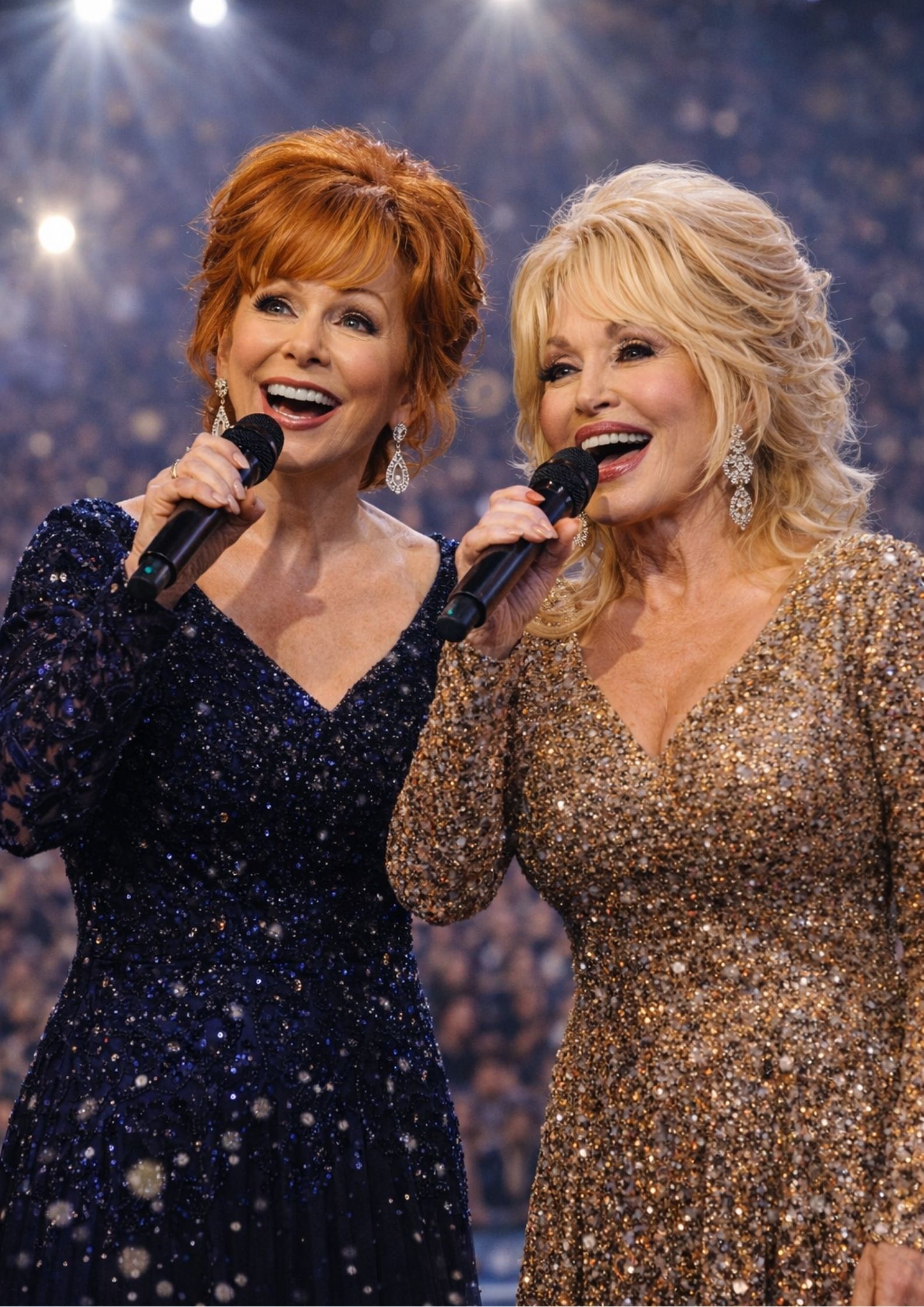
The moment didn’t feel like television.
It felt like recognition.
When Bear Bailey stepped onto the Star Search stage and began singing Jelly Roll’s “Hard Fought Hallelujah,” the room shifted. The song wasn’t just familiar — it was personal. And seated at the judges’ table was the man who wrote it.
By the final note, there wasn’t a dry eye in the house.
Jelly Roll leaned forward, visibly emotional. Sarah Michelle Gellar and Chrissy Teigen wiped away tears. The audience followed. Scores came in high. Votes pushed Bailey into the next round.
But numbers weren’t what mattered.
“What a voice,” Jelly Roll said on the red carpet afterward — words that carried far more weight than a compliment.
Because what Jelly Roll saw on that stage wasn’t just a contestant.
He saw a reflection.
Bear Bailey, a 37-year-old singer from Louisiana, shares more than a sound with Jelly Roll. Face tattoos. Southern roots. A past shaped by addiction. A faith forged in recovery. Two men who were once pushed aside — and somehow found their way back.
What makes the moment even more striking is this: Bailey chose the song before he knew Jelly Roll would be a judge.

“They told me almost two weeks ago during the interview process,” Bailey explained later. “So, America — I didn’t know. I had no clue.”
No strategy.
No calculation.
Just instinct.
Bailey credits his success not to coincidence, but to faith. “God’s the great puzzle piecer,” he said. “He put all of them together so it fell His way.”
That belief is woven through everything Bailey says — and sings.
Reacting to Jelly Roll’s feedback, Bailey struggled to find words. “I’m a huge fan of Jelly,” he admitted. “Seeing someone like him — who looks like me — still be used by God to do big things… it meant the world to me.”
For years, Bailey felt overlooked. He lost deals because of addiction. Doors closed quietly. Opportunities vanished without explanation. But watching Jelly Roll rise — openly, honestly, without erasing his past — gave him something rare.
Hope with proof.
“I know God’s a believer in redemptive power,” Bailey said. “He’s a redeemer. I have it tattooed on me.”
That word — redeemer — hung in the air.
Because Jelly Roll’s journey has become a map for people who thought they’d gone too far to come back. And on that stage, Bear Bailey wasn’t chasing fame.
He was stepping into possibility.
Jelly Roll understood that immediately.
“It’s beautiful to see a boy from Louisiana get a moment,” he said on the carpet — a sentence that sounded less like judgment and more like blessing.
For Bailey, the experience barely felt real.
“I told the other contestants, ‘Did I pass away and God’s letting me live my dreams?’” he laughed. “I don’t remember everything I said on stage. I just know God’s good.”
Next week, Bailey will face another musician head-to-head on Star Search. But for now, he’s absorbing the shock — enjoying Los Angeles, swimming in January, joking about “living like a white Rick Ross,” while proudly representing Louisiana.
“I’m representing the boot,” he said. “The dirty. I appreciate y’all. Love you all back home.”
What made the moment resonate wasn’t polish.
It was alignment.
Two men. Two paths marked by mistakes. One song. One stage. And a rare instant where the past didn’t disqualify anyone — it connected them.
Star Search crowned a winner that night.
But something else happened too.
A mirror appeared.
And both men recognized what they saw.
🔥 HOT NEWS: Dolly Parton and Reba McEntire bring old-soul country warmth into the New Year, and fans are here for it ⚡rub

It arrived the way the best Christmas moments do—without warning, without noise, without needing to prove anything. One minute, the world was still spinning at its usual speed, full of headlines and hurry. The next, Dolly Parton and Reba McEntire stepped into the warm glow of a Christmas stage together, and everything softened. It felt like a dream from a simpler time—yet it was fully awake, right there in front of everyone, as real as breath on a cold night.

There was no rush to impress. No anxious attempt to “update” what never asked to be modernized. What unfolded didn’t crash into the room with fireworks. It landed gently, like the first snow on a Tennessee hillside or an Oklahoma plain—quiet, unforced, and unmistakably home. And in that softness, something rare happened: the noise of the world seemed to step back, as if even time itself understood this was something to be treated with care.
You could feel it in the way the moment held its own space. No flashing lights chased attention. No production tricks tried to steal the spotlight. The stage didn’t demand that you clap on cue or gasp at a surprise. Instead, it invited you to listen—truly listen—the way people used to when music wasn’t just content but comfort. When the first notes rose, it wasn’t spectacle. It was presence.
Because Dolly and Reba didn’t sing at the audience. They sang with them.
Their harmonies weren’t aiming for sterile perfection. They were aiming for connection. Every line felt patiently placed, like a hand smoothing a quilt that has warmed the same family for generations. There was something deeply human in it: two voices shaped by time, faith, and lived truth, returning to the kind of country music that doesn’t shout its meaning. It simply tells it—plain, honest, and brave enough to be gentle.
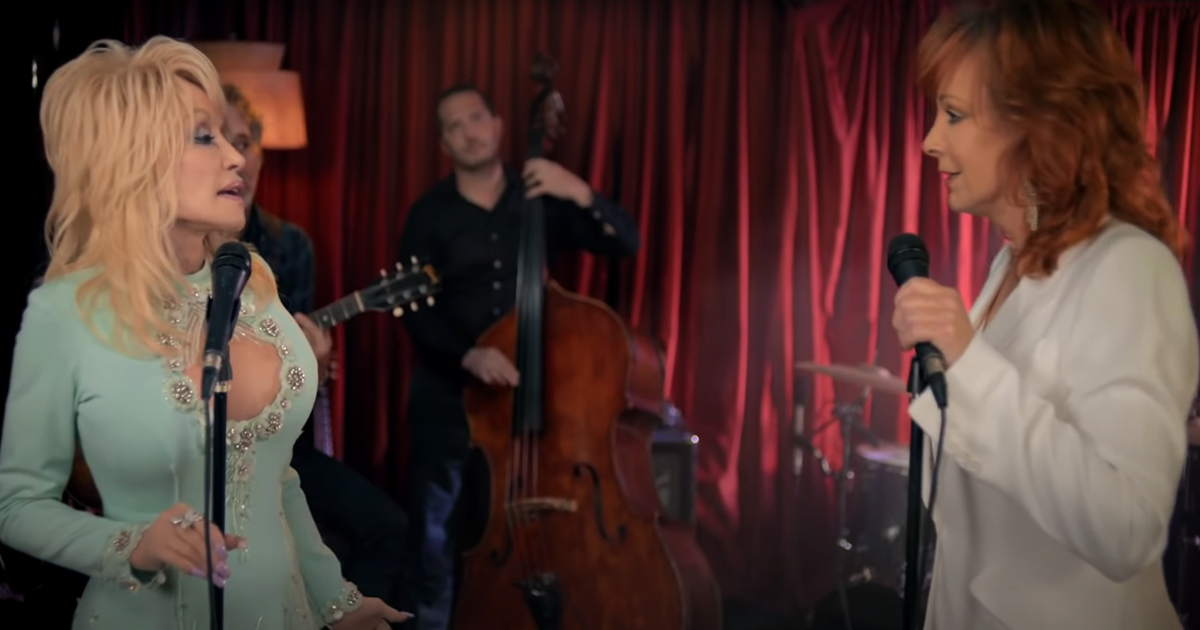
What made it feel miraculous wasn’t surprise. It was recognition.
Recognition of melodies that don’t hurry.
Of lyrics that don’t scream to be noticed.
Of country music that trusts silence as much as sound.
In a culture trained to scroll past anything that doesn’t explode, Dolly Parton and Reba McEntire reminded everyone that the deepest power often arrives softly. Dolly’s voice carried a warm wisdom—like a lamp left on for you in the window, steady and welcoming. Reba’s voice brought clarity and strength, the kind that reassures you without hardening the heart. Together, they offered something that’s become rare: a moment that didn’t chase the audience. It met them where they were.
As the song unfolded, memories seemed to rise in the air like woodsmoke.
Front porches dusted with frost.
Church pews lit by candlelight.
Car radios humming low on long winter drives.
Kitchen tables where someone always pours another cup.
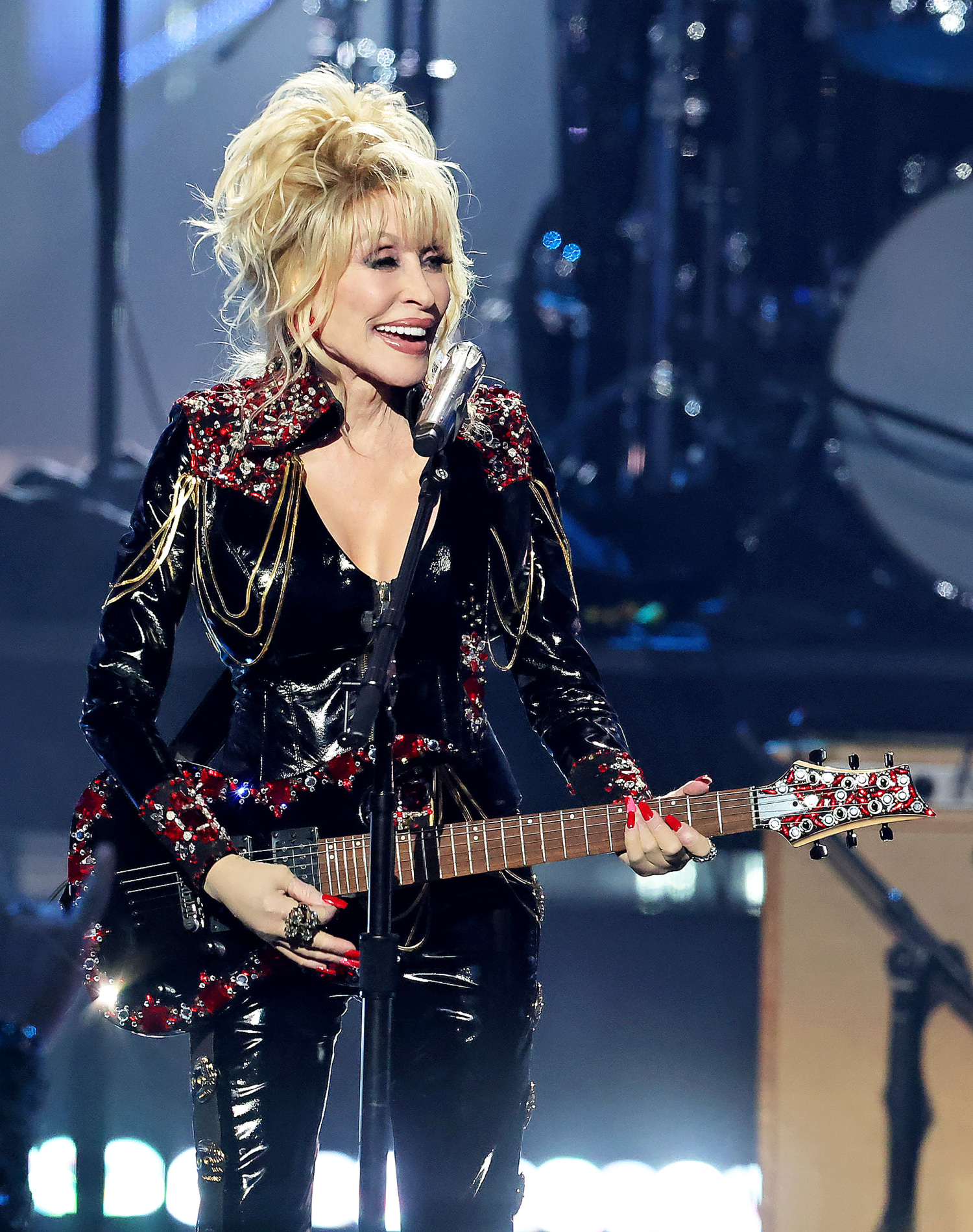
This wasn’t nostalgia engineered for effect. It was continuity. It was the feeling of a thread never fully broken, simply tugged gently back into view. Traditional country—real traditional country—has always been about storytelling that tells the truth without needing a spotlight to validate it. It’s about the quiet dignity in ordinary lives. It’s about love that lasts, sorrow that teaches, faith that steadies, and hope that returns even after hard years.
And that’s what this Christmas moment carried: not a performance meant to trend, but a reminder meant to last.
People didn’t cheer right away. They listened.

That part mattered. In an era where applause often arrives before a note finishes, the listening felt almost sacred. The music didn’t just fill the space—it settled into it. Like snowfall, it changed the landscape without demanding attention. You could imagine it drifting into the corners of the room, into the ribs of the building, into the hearts of people who didn’t realize how badly they needed something calm.
For Dolly Parton and Reba McEntire, it didn’t feel like a legacy statement or a symbolic return. It felt like honoring what shaped them—faith, family, storytelling, and the belief that music can still be tender in a loud world. It was a reminder that the roots of country music are not found in volume, but in sincerity.
When the final note faded, the applause rose slowly—respectfully—like gratitude finding its voice. Not a reaction. A thank-you.
Because what the audience witnessed wasn’t just a Christmas performance.
It was a homecoming.
A reminder that traditional country still knows the way back.
That it still glows when treated with care.
And that sometimes, the most powerful miracles arrive quietly—wrapped in harmony, patience, and the unhurried truth of two voices that never forgot where they came from.