
From the moment we enter adulthood, there is an unspoken script: get a good job, meet the right partner, marry, and eventually have children.
Those who choose a path that diverges from this traditional expectation—whether to delay parenthood, remain childfree, or pursue alternative life goals—often face intrusive questions, judgment, and unsolicited advice.
These questions can be deeply personal and, at times, emotionally taxing. They can make people feel that their private decisions are somehow open to public scrutiny.
For couples and individuals with disabilities, these pressures and judgments can be magnified.
Society frequently misjudges the capabilities of people with congenital conditions, particularly regarding their ability to raise children.
Over twenty years ago, a remarkable story emerged from California that challenged assumptions about ability, independence, and family life.
Patti White, a resident of California, received news that was at once thrilling and anxiety-inducing: her daughter, Lisa White, had announced she was pregnant.
Lisa was born with Down syndrome, a chromosomal condition caused by the presence of an extra copy of chromosome 21.
Down syndrome manifests in varying degrees of intellectual and physical challenges, but it is crucial to recognize that many individuals with Down syndrome can live independent lives, pursue careers, and engage in fulfilling relationships.
Despite these capabilities, the likelihood of individuals with Down syndrome having children is statistically lower, particularly for men, whose fertility is often compromised. Still, Lisa and her partner proved that exceptions exist.
Lisa White: Independence and Capability
By the age of 29, Lisa had built a life marked by independence and self-sufficiency. She had been living on her own for eleven years and worked full-time at a local Goodwill store, where she was well-liked by her coworkers and customers alike.
Patti White recalled in a 2016 interview with Voice that Lisa “got along with everyone.
She could do everything except the cash register. She liked it there and they liked her.”
In addition to her professional independence, Lisa had developed a healthy adult relationship with a man who also had Down syndrome.
They maintained separate households while dating, demonstrating both maturity and self-awareness in their interactions.
Discussions of birth control, personal boundaries, and safe sex were part of their relationship—a testament to their thoughtful approach to adult responsibilities.
The Unexpected Announcement
Despite prior assumptions, fate had a different plan. Patti recalled the moment she learned of Lisa’s pregnancy: she had just returned from lunch and was checking her voicemail when she heard her daughter’s excited voice.
“Hi mum, I just wanted you to know you are going to be a GRANDMOTHER!” Lisa exclaimed.
Health
Patti’s immediate reaction was a mix of shock and delight. “My mind went in all directions. How could this be? Her boyfriend has Down syndrome!” she said.
Despite initial surprise, Patti quickly shifted to full support for her daughter, demonstrating the importance of family backing in the face of public scrutiny and societal doubt.
Facing Public Judgment
The announcement of Lisa’s pregnancy was met with criticism and skepticism by some outsiders. Many questioned whether she could adequately care for a child, labeling her decision as irresponsible or selfish.
These judgments, rooted in societal misconceptions about Down syndrome, highlight the persistent biases that individuals with disabilities can face.
Yet Lisa’s family remained steadfast in their support, shielding her from undue criticism while helping her prepare for the challenges of parenthood.
Lisa approached her pregnancy with dedication and thorough preparation. She attended childbirth classes, worked with a pregnancy coach, and carefully monitored her health.
Like many expectant mothers, she experienced common symptoms such as morning sickness and fatigue, all while maintaining her full-time job. She described the experience candidly:
“It was hard for me to walk around when I was pregnant. I was working five days a week. I had morning sickness and I wasn’t feeling good. I felt like I was going to throw up,” she shared with Voice.
Given her condition, Lisa’s pregnancy was categorized as high-risk and received specialized medical attention.
Yet despite the additional precautions, her experience shared many similarities with pregnancies across the general population.
Birth and Family Life
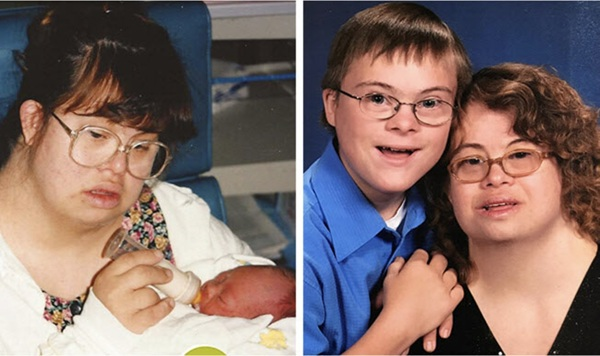
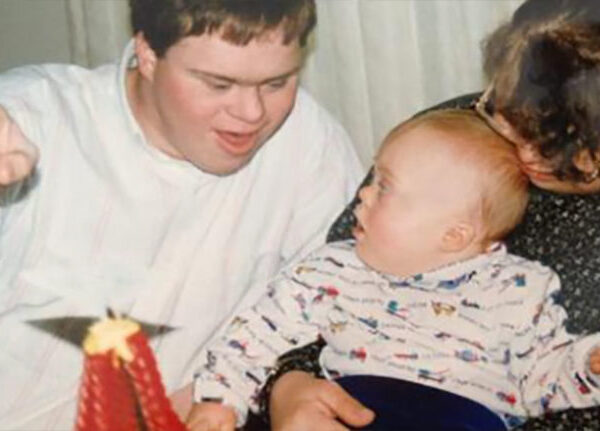
Lisa’s son, Nic, was born four weeks early and, like his parents, was diagnosed with Down syndrome. His father was present for the birth, underscoring the couple’s commitment to shared parenting.
Initially, Lisa and Nic’s father attempted to live under one roof, but circumstances made cohabitation difficult. Tragically, Nic’s father passed away when Nic was only five years old, leaving Lisa to raise her son as a single mother.
Despite these challenges, Lisa and her mother Patti created a nurturing, stable environment for Nic.
Their family became a testament to resilience, love, and the importance of support networks in raising children, particularly in situations where public perception may be skeptical or judgmental.
Overcoming Social Isolation
The journey was not without social obstacles. Lisa faced ostracism from some friends and community members, whose parents feared that her example might influence their own children to pursue early parenthood.
This kind of social isolation can be painful, but Lisa’s family emphasized love, guidance, and structure over societal judgment.
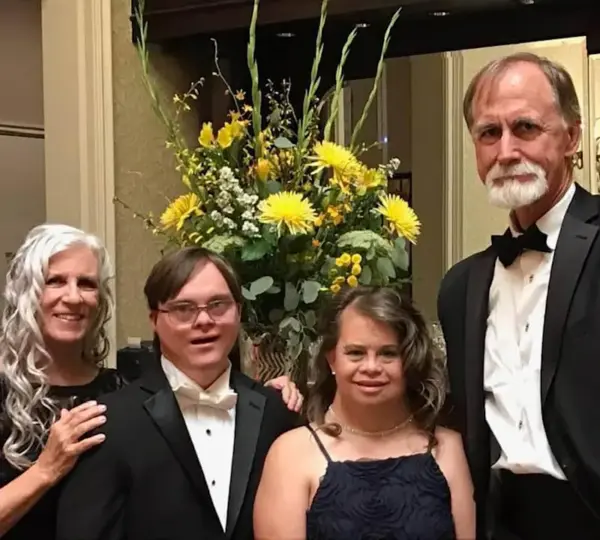
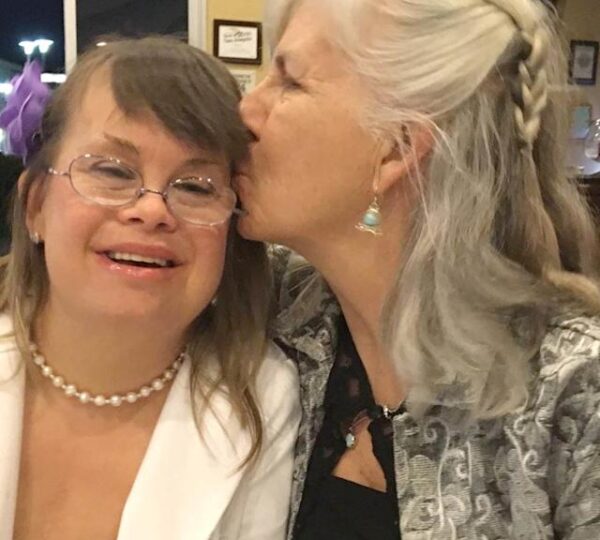
The support of Patti White proved invaluable. She helped navigate medical appointments, advocated for Lisa’s autonomy, and provided emotional support.
Their collaboration exemplifies the crucial role of family in empowering individuals with disabilities to lead meaningful, self-directed lives.
Nic White: Thriving Against the Odds
Today, Nic is a 24-year-old young man who has grown into a confident, capable, and well-educated individual.
He has graduated from college and speaks openly about the deep respect and admiration he holds for his mother and grandmother. In interviews, he described the influence of his upbringing:
“I have two moms. My mom Lisa is my greatest influence in my life. She gave me life and she gave me love and she gave me birth, and she is always wonderful and she is beautiful,” he told Fabiosa.
Nic’s success is a clear demonstration of how proper support, encouragement, and nurturing environments can enable children of parents with disabilities to flourish.
His achievements are a testament to both his innate abilities and the dedication of Lisa and Patti.
Celebrating Milestones
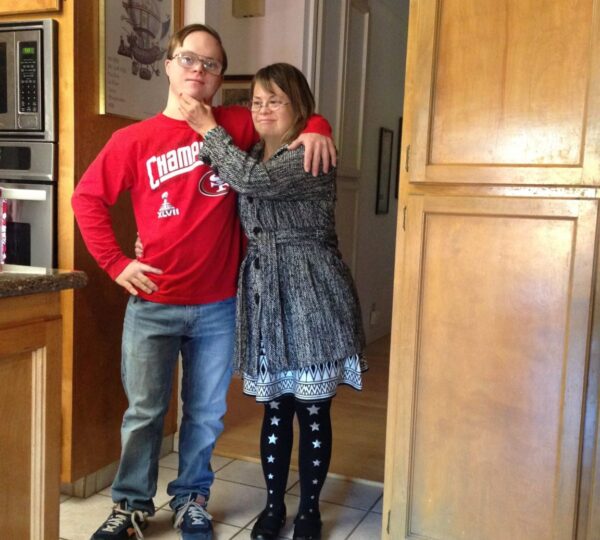
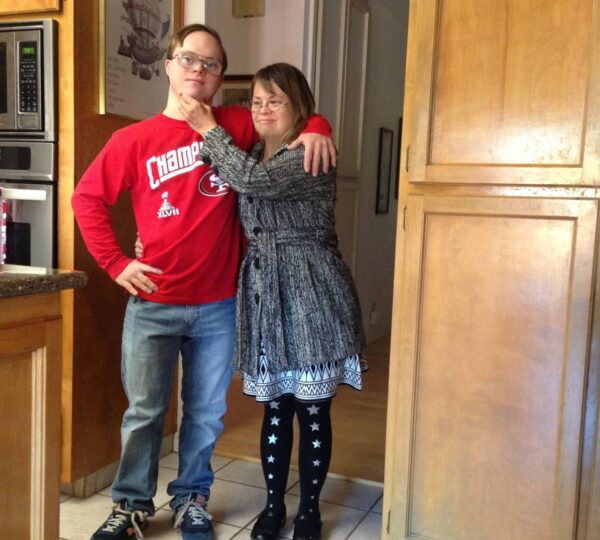
In 2016, Patti shared a heartwarming update on social media, showcasing a photograph of Lisa and Nic. She wrote: “This is my daughter, Lisa, clowning with her son, Nic. They both have Down Syndrome.
This year is a landmark for all of us. She will turn 50 and he will turn 20. Me, I am older than dirt. So proud of us. Our goal when she became pregnant was for her to know him and have a relationship with him.
There were many ups to their ‘Downs,’ but after all these years we can honestly say they have overcome the odds and share tremendous love for each other and their small little family unit.”
This public acknowledgment not only celebrated personal milestones but also provided inspiration and information for families navigating similar decisions.
Patti’s words highlight the value of visibility and advocacy in demonstrating the capabilities of people with Down syndrome.
Lessons and Broader Implications
Lisa, Patti, and Nic’s story challenges prevailing assumptions about disability, parenthood, and autonomy. It underscores several key lessons:
Support is crucial: Family backing can empower individuals to pursue life goals, even in the face of societal skepticism.
Disability does not preclude capability: With preparation, education, and support, people with Down syndrome can lead independent lives and raise children.
Public perception is often misguided: Criticism based on assumptions rather than facts can unfairly stigmatize families making informed, responsible decisions.
Individual choice matters: The right to make personal decisions about parenthood should be respected, regardless of societal expectations or disability status.
By sharing their story, the White family provides a source of encouragement for other families who may be contemplating parenthood in unconventional circumstances.
Their experiences demonstrate that with love, preparation, and perseverance, families can thrive despite initial challenges or external doubts.
Conclusion
The journey of Lisa White and her son Nic is a remarkable example of resilience, independence, and familial love. From a high-risk pregnancy to the challenges of single parenthood, the Whites have navigated societal judgment and personal adversity with determination and grace.
Their story challenges stereotypes about Down syndrome, parenthood, and capability, offering a powerful message: individuals with disabilities are fully capable of making informed, responsible life choices, and with the right support, they can provide loving, stable environments for their children.
Nic’s accomplishments today—a college graduate, confident, and thriving—serve as living proof that the combination of family support, community resources, and personal determination can overcome even the most daunting odds.
Through their journey, Patti, Lisa, and Nic White continue to educate, inspire, and remind society of the inherent potential within all individuals, regardless of disability.
Their story is not just a tale of overcoming challenges—it is a celebration of love, autonomy, and the power of belief in human potential.

