ST.He Went to School and Never Came Home: The Death of Kendrick Johnson and the Questions That Refuse to Fade

On January 11, 2013, the life of Kendrick Johnson, a 17-year-old high school student, came to an abrupt and devastating end in a place where teenagers were meant to feel safe, ordinary, and preoccupied with nothing more than classes, sports, and friendships.
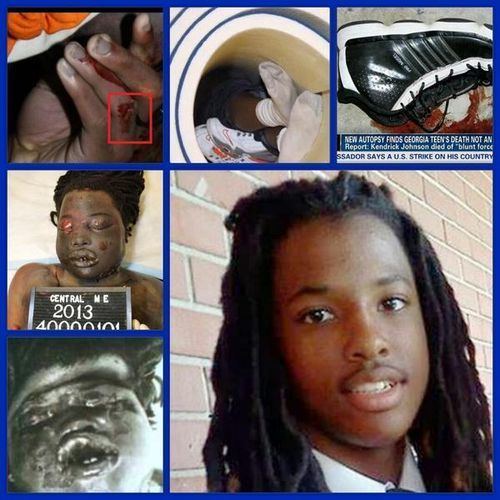
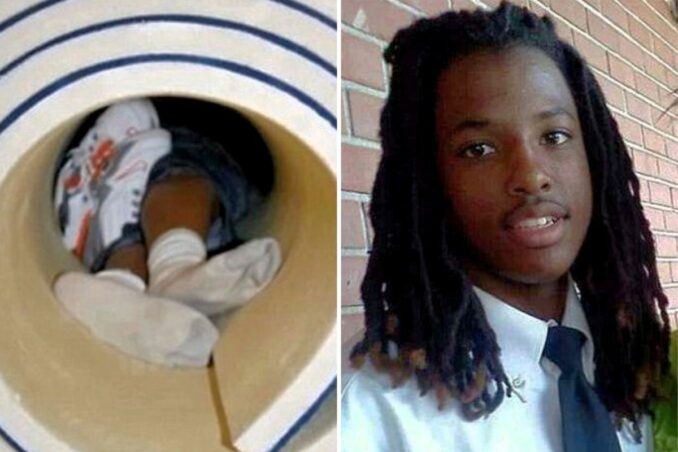
That afternoon, Kendrick was found dead inside a rolled-up wrestling mat at Lowndes High School.
His body was positioned upside down, his head buried deep inside the mat, his feet pointing upward toward the gym floor.
Inside the mat, near his legs, were his shoes — a small detail that would later grow into one of the most scrutinized and debated aspects of the case.
The discovery stunned students and staff who had walked those same hallways every day without ever imagining that something so horrifying could unfold within them.
A familiar gym, once filled with echoes of practice whistles and teenage laughter, instantly became the site of a tragedy that would ripple far beyond its walls.
https://youtube.com/watch?v=V_0yyvee6N0%3Fembeds_referring_euri%3Dhttps
For Kendrick’s family, the shock was immediate, overwhelming, and permanent.
No parent expects to receive a phone call telling them their child has died alone on a school campus.
No family prepares for a goodbye that arrives without warning, explanation, or the chance to ask why.
From the very beginning, this was never just a death.
It was a moment that fractured trust, ignited suspicion, and set into motion a decade-long trail of unanswered questions, legal battles, and public debate that continues to divide opinion even today.
Investigators from the Lowndes County Sheriff’s Office, along with the Georgia Bureau of Investigation, moved quickly to assess the scene and determine what had happened to Kendrick inside that wrestling mat.
Within hours, a working theory began to form.
Investigators concluded that Kendrick had likely gone into the mat headfirst while attempting to retrieve a pair of shoes he had previously stored there.
The mat, they said, had been rolled upright and stored vertically against a wall, a practice not uncommon in school gyms.
According to this explanation, Kendrick lost his balance, became stuck, and was unable to free himself once his arms were pinned and his body weight shifted downward.
Medical examiners later explained that being suspended upside down for an extended period can restrict breathing and cause blood to pool in the head, eventually leading to death through positional asphyxia.
In simple terms, investigators believed Kendrick became trapped and suffocated, alone and unheard, in a tragic accident.
Within roughly twenty-four hours, Kendrick Johnson’s death was officially ruled an accident.
For law enforcement, the case appeared straightforward.
For Kendrick’s family, it did not.

From the moment they learned how quickly the case was closed, Kendrick’s parents felt something was wrong.
Not necessarily because they had proof of foul play, but because they believed the investigation had moved too fast and left too many critical questions unanswered.
They pointed to delays in notifying the county coroner, which they believed could have affected early observations at the scene.
They raised concerns about the lack of immediate crime scene preservation, noting that students and staff continued moving through the gym before it was fully secured.
They questioned inconsistencies surrounding surveillance footage, especially gaps that were later explained as technical limitations of the school’s recording system.
They spoke of the emotional trauma of seeing Kendrick’s body after embalming, an experience that left an indelible mark on their grief.
The family was also deeply disturbed by the discovery that Kendrick’s organs were not returned to his body after the initial autopsy, having been replaced with newspaper.
Though this is a standard medical practice, the way it was communicated — or not communicated — intensified their pain and mistrust.
None of these issues were ever proven to indicate homicide.
But together, they formed a wall of doubt that the family could not climb over.
As weeks passed, doubt hardened into belief.
The family requested a second, independent autopsy, hoping it would either confirm their fears or finally give them clarity.
That private autopsy suggested possible blunt force trauma, a finding that reignited public attention and dramatically raised the stakes of the case.
News headlines spread rapidly.
Social media theories multiplied.
Public opinion fractured into opposing camps, each convinced the truth had been overlooked or deliberately ignored.
Federal medical experts later reviewed the findings of the second autopsy and reached a different conclusion.
They stated that the evidence did not support homicide and that the injuries cited could be explained by decomposition and postmortem changes rather than assault.
Years later, a third examination was conducted.
Once again, it failed to produce new evidence of foul play.
Across all official reviews, one critical fact remained unchanged.
No physical evidence ever linked another person to Kendrick’s death.
There was no DNA.
No weapon.
No eyewitness.
No confession.
Despite this, the public conversation increasingly focused on surveillance footage and alleged suspects.
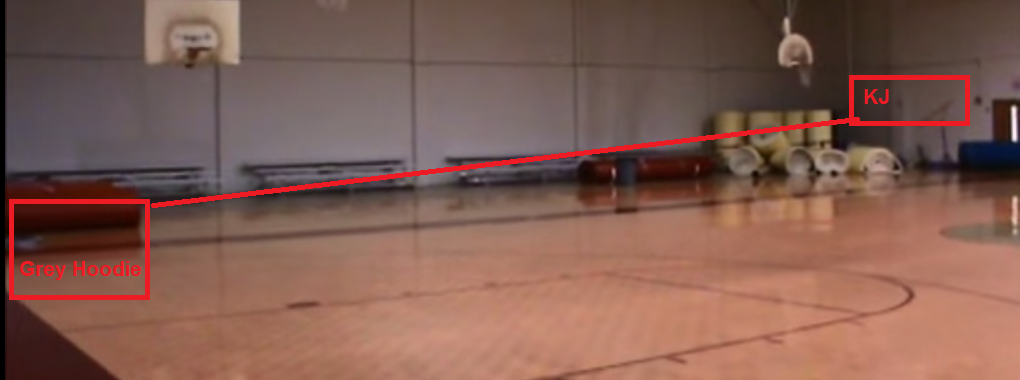
Video showed Kendrick entering the gym, but it did not capture the moment he entered the wrestling mat.
To many observers, that absence felt suspicious.
Investigators later explained that the gaps were consistent with how the recording system functioned at the time, cycling cameras and overwriting footage automatically.
They found no evidence of tampering.
Two classmates were publicly accused by the family and named in lawsuits — accusations that followed them for years and permanently altered their lives.
Surveillance footage, phone records, and corroborated timelines later showed that neither individual was present at the time of Kendrick’s death.
They were never charged.
Courts repeatedly ruled there was no evidence tying them to the incident.

In 2016, the case reached a pivotal moment when the U.S. Department of Justice conducted a federal review.
After examining the evidence, officials announced there was insufficient proof to support federal criminal charges or civil rights violations.
For Kendrick’s family, the decision was devastating.
For authorities, it confirmed what they had concluded years earlier.
The Johnson family continued pursuing accountability through civil lawsuits, driven by grief, frustration, and the belief that the truth had not been fully acknowledged.
Those cases were ultimately dismissed.
Courts ruled that the allegations were unsupported by evidence.

The financial consequences for the family were severe, adding another layer of loss to an already unbearable situation.
In 2021, local authorities briefly revisited the evidence following renewed public attention and additional requests from the family.
Once again, the case was not reclassified.
No new findings emerged.
Today, Kendrick Johnson’s death remains officially classified as an accident.
That fact, written plainly in official records, stands in stark contrast to the emotional reality surrounding the case.
For some, the explanation of positional asphyxia inside a wrestling mat is tragic but plausible.
For others, it will never fully account for the pain, the lingering doubts, or the feeling that something vital was missed.

What makes this case endure is not only how Kendrick died, but what followed — the collision between grief and procedure, between a family’s need for certainty and a system that demands evidence above all else.
Kendrick was more than a case file.
He was a son.
A student.
A teenager with a future that ended on an ordinary school day.
https://youtube.com/watch?v=m1njyIjwWSo%3Fembeds_referring_euri%3Dhttps
The facts, as they stand today, support an accidental death.
The emotions, however, tell a far more complicated story.
And that tension is why, more than a decade later, the question still lingers — quietly, painfully, and unresolved in the hearts of many.
What do you believe happened?
Houston: A Little Heart Warrior Who Left a Lasting Legacy

From the very first moment he entered the world, Houston’s life was marked by courage, resilience, and an unbreakable spirit. Born on March 15, 2024, with Hypoplastic Left Heart Syndrome (HLHS), a rare and complex congenital heart defect, he faced challenges that most of us can barely imagine. Yet, even as a newborn, Houston demonstrated a strength far beyond his tiny frame—a determination to fight that would inspire everyone who crossed his path.
At just six days old, Houston underwent his first heart procedure, known as the Hybrid procedure, a delicate operation that set the stage for the complex medical journey ahead. Two months later, at eight weeks old, he underwent the Norwood procedure, a critical surgery designed to support the underdeveloped side of his heart. These procedures, daunting for any child, were only the beginning of a series of obstacles that would test his resilience, his family’s courage, and the endurance of everyone around him.
Tragically, Houston faced a severe complication just four days after his Norwood surgery—a stroke that reminded everyone how fragile his tiny body was. Despite this setback, he continued to fight, proving time and again that even the smallest hearts can carry the greatest courage. Additional challenges followed: he underwent a G-tube surgery to help with feeding, and his family watched with worry and hope as their little warrior endured every procedure with remarkable strength.

At five months old, Houston faced yet another major surgery: the Glenn procedure, a critical step in the treatment of HLHS. While the surgery itself was a success, his body confronted one final and overwhelming obstacle. The pressures in his heart had caused his lymphatic system to stop functioning, a complication so severe that even the best medical care could not reverse it. After careful consideration, with hearts full of love and sorrow, Houston’s family made the impossibly difficult decision to let him go.
On February 2, 2025, Houston gained his angel wings. Though his time on earth was far too brief, his impact was profound. He had fought tirelessly, with a bravery and resilience that inspired everyone around him. Every moment of his life—from surgeries to recovery, from tiny triumphs to quiet struggles—was a testament to the strength that even the youngest warriors can possess.
Houston’s story is not just about medical procedures or the battles he faced; it is about the unbreakable human spirit and the power of love that surrounds it. His family’s devotion, the care of the medical teams, and the support of friends and community all contributed to his journey, reinforcing the idea that even in the face of unimaginable challenges, love and compassion can carry a child through the darkest moments.
Though Houston’s life was brief, he leaves behind a legacy that will be remembered forever. He reminds us all that heroism is not measured by the length of time one has lived, but by the courage, joy, and love expressed during the moments we are given. Houston’s bravery encourages families, caregivers, and heart warriors everywhere to cherish every heartbeat, every smile, and every small victory, no matter how fleeting life may seem.

Every milestone Houston reached, every moment of resilience, and every courageous fight leaves a mark on the hearts of those who knew him. His story serves as a beacon of inspiration, showing that even the tiniest lives can teach us the most profound lessons about strength, hope, and the enduring power of love.
Houston may no longer be with us, but his spirit continues to shine in the hearts of his family and everyone who witnessed his journey. His life, though short, was filled with bravery, love, and a fighting spirit that will never be forgotten.
Forever loved, forever remembered, Houston’s journey stands as a poignant reminder of the incredible courage of heart warriors—and the profound impact a single little life can have on the world. His story honors not just the struggles of children born with HLHS, but also the unwavering love and strength of families who walk alongside them every step of the way.
Houston’s angel wings carry the echoes of a life that, while brief, was powerful beyond measure—a life that reminds us all to treasure each heartbeat, to fight with love, and to honor the bravery that resides in even the smallest of hearts. 💖