
The Boy Who Walked with Grace
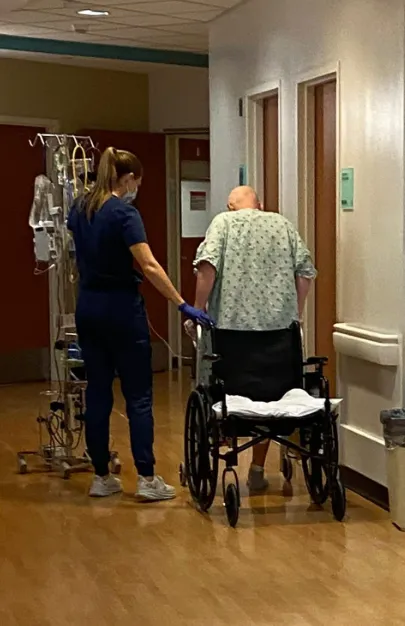
The antiseptic smell of St. Jude’s Hospital had become the only scent 14-year-old Will Roberts knew for six months. It was a sharp, cold smell that clung to his clothes and settled in his lungs. For Will, the world had shrunk to the size of a sterile room, a rhythmic heart monitor, and the searing, deep-seated ache in his right leg—the epicenter of the osteosarcoma that was trying to claim his life.
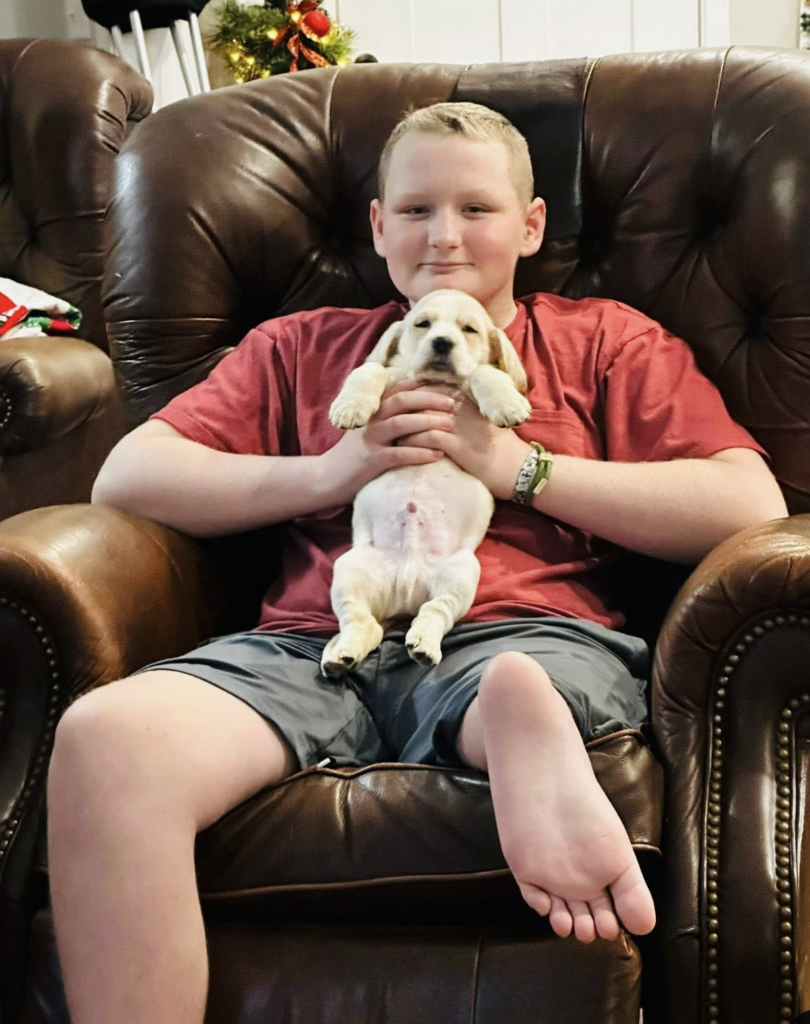
Will had always been a runner. Before the diagnosis, he was the fastest kid in his grade, a blur of golden hair and lanky limbs on the soccer field. Now, his body was a map of scars and complications. The cancer had been aggressive, leading to lung nodules and a fragile immune system that kept him trapped in isolation. His hair was gone, replaced by a knitted beanie he wore even when he sweated, and his frame had thinned to a haunting fragility.
But today was different. After weeks of grueling chemotherapy and a terrifying bout of pneumonia, the doctors had granted him a “mercy leave”—a temporary discharge to breathe real air and see the world outside the glass.
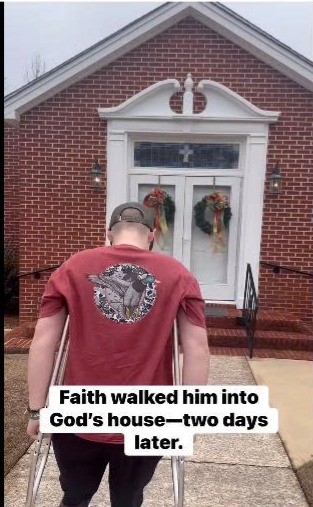
“Where do you want to go first, Will?” his father, Mark, asked as he helped Will navigate the daunting task of sitting up. “The park? The burger joint?”
Will looked at his mother, Sarah, whose eyes were perpetually rimmed with the red fatigue of a parent who had forgotten how to sleep. He gripped his crutches, the cold aluminum a stark contrast to his pale hands.
“I want to go to St. Jude’s Cathedral,” Will whispered, his voice raspy but firm. “I want to say thank you.”
The Journey Home
The drive through the suburbs of their hometown felt like a dream. Will leaned his head against the cool glass of the car window, watching the vibrant greens of the trees and the mundane bustle of people walking their dogs. To them, it was a Sunday morning. To Will, it was a miracle.
As they pulled up to the stone steps of the cathedral, Will felt a wave of anxiety. He was weak. His leg throbbed with every heartbeat, a reminder of the tumor that had fractured his bone. The “complications” the doctors spoke of meant that every movement was a calculated risk.
“We can get the wheelchair, honey,” his mother suggested softly, reaching for the trunk.
“No,” Will said, his jaw tightening with a flash of the athlete he used to be. “I want to walk in. I need to stand before Him.”
The Walk of Faith
The heavy oak doors of the cathedral creaked open. The service had just ended, and the congregation was beginning to filter out into the vestibule. When the first few people saw the car pull up and the thin boy struggle to stand on his crutches, a hush began to fall over the crowd.
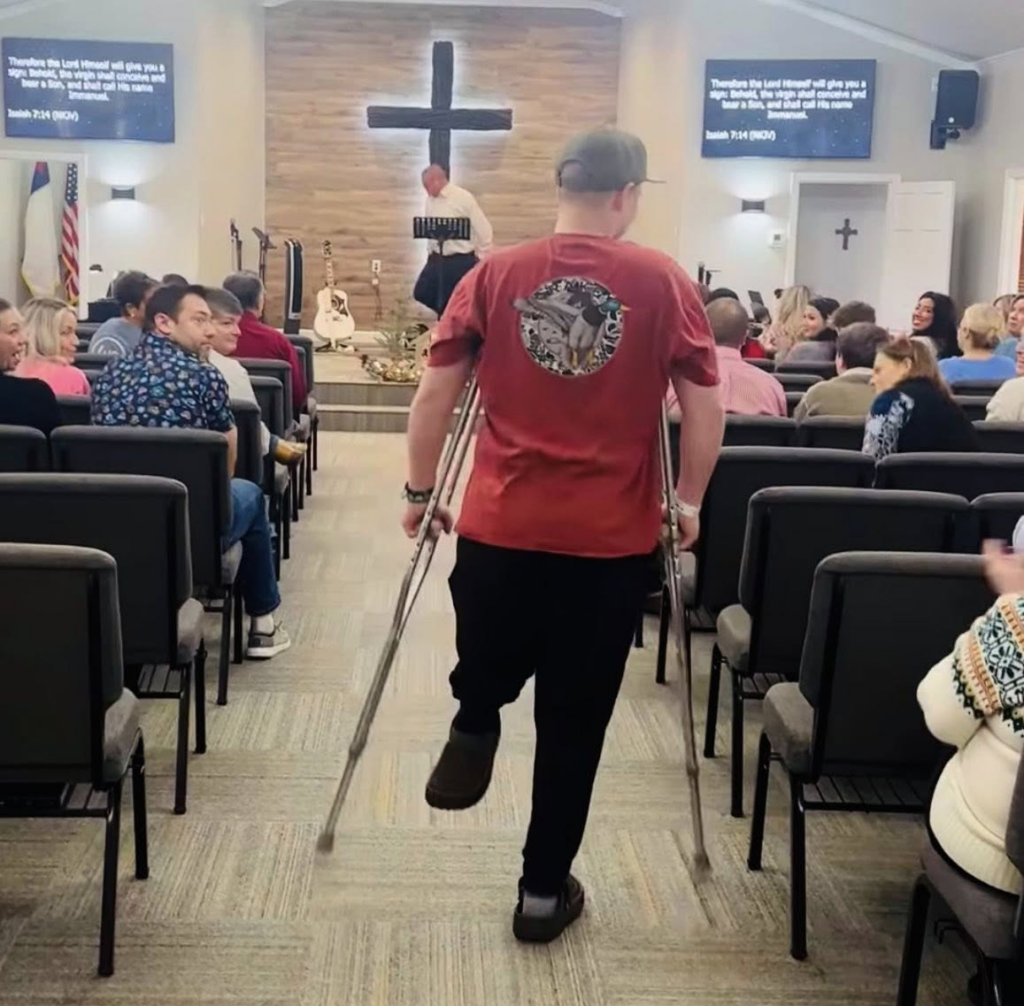
Will’s progress was agonizingly slow. He placed the rubber tips of the crutches forward, swung his frail body, and landed with a heavy, uneven thud. Thump-drag. Thump-drag. His face was beaded with sweat. His breath came in shallow, ragged gasps. Every step felt like walking through broken glass, the pain radiating from his hip to his chest. His parents hovered inches away, their hands twitching, wanting to catch him, yet honoring his need to do this alone.
As he reached the center aisle, someone started to clap.
It began as a solitary, rhythmic sound in the back of the hall. Then another joined. Then another. Within seconds, the vast, vaulted ceiling of the cathedral was echoing with a thunderous standing ovation. These were neighbors who had held prayer vigils, strangers who had heard his name in the Sunday bulletins, and friends who hadn’t seen him since his face was full and tan.
Will stopped. He looked up, his eyes wide. He saw Mrs. Gable, his old math teacher, weeping openly as she cheered. He saw his soccer teammates, looking awkward but clapping with all their might. He didn’t see pity in their eyes; he saw reverence. They weren’t clapping for a sick boy; they were cheering for a warrior returning from a front line they couldn’t imagine.
A Sacred Conversation
The noise gave Will a surge of adrenaline he hadn’t felt in months. He straightened his back as much as the illness allowed and made his way to the very front, near the altar where the sunlight filtered through the stained glass in ribbons of violet and gold.
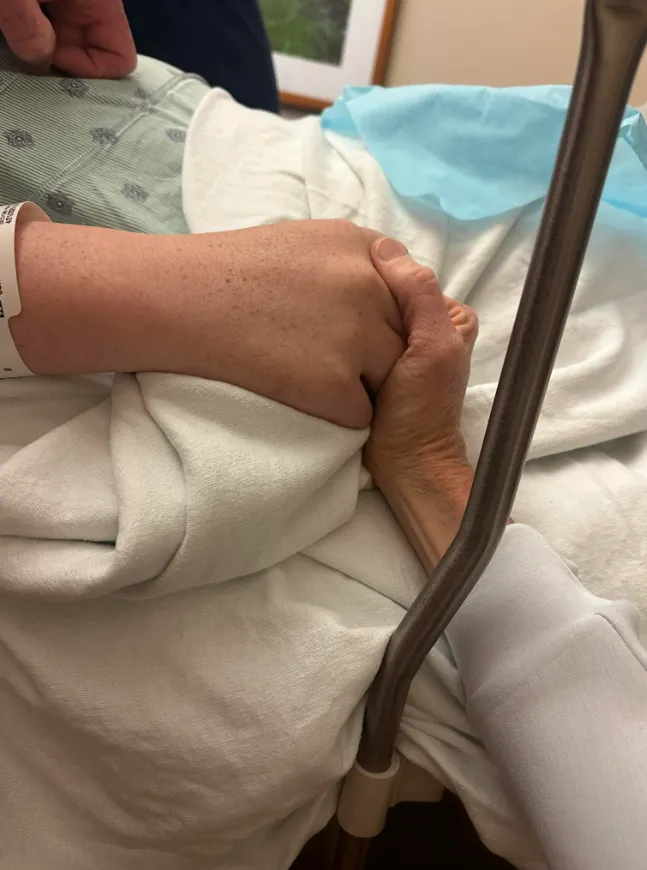
He let his crutches lean against a wooden pew and sank to his knees—a movement that cost him immense pain, but one he offered up as a sacrifice.
He didn’t pray for the cancer to vanish. He didn’t ask why he was chosen for this burden. Instead, he closed his eyes and felt the warmth of the light on his face.
“Thank you,” he breathed into the silence of his own heart. “Thank you for the strength to stand today. Thank you for my mom and dad. Thank you for showing me I’m not alone.”
In that moment, the crushing weight of the “worse-case scenarios” and the “complications” seemed to lift. For the first time since his diagnosis, Will felt a profound, unshakable peace. It was a quiet whisper in his soul that told him that no matter what happened to his physical body, his spirit was untouchable. He believed, with the clarity of a saint, that God was not just in the beautiful church, but in the very marrow of his aching bones, holding him together.
The New Strength
When Will finally turned around to leave, his face was transformed. The gray pallor of the hospital had been replaced by a faint, healthy glow.
Buy vitamins and supplements
His father met him at the end of the aisle, tears streaming down his face. “Ready to go back, champ?”
“I’m ready,” Will said, but his voice was different now. It was stronger. “But we’re not just going back to a hospital, Dad. We’re going back to finish the fight.”
The community stayed until the Roberts’ car pulled away, waving and shouting words of encouragement. The family sat in the car, the silence no longer heavy with grief, but filled with a new, stubborn hope.
The road ahead was still steep. There would be more scans, more needles, and more nights of pain. But as Will looked at his hands, he realized they weren’t shaking anymore. He knew that the applause of the people was a reflection of a higher love, a divine cheerleading section that would follow him into every surgery and every dark hour.
Will Roberts was 14 years old, he had cancer, and he had complications that would make most men crumble. But as he watched the cathedral spire disappear in the rearview mirror, he knew the truth: he was never walking alone.

